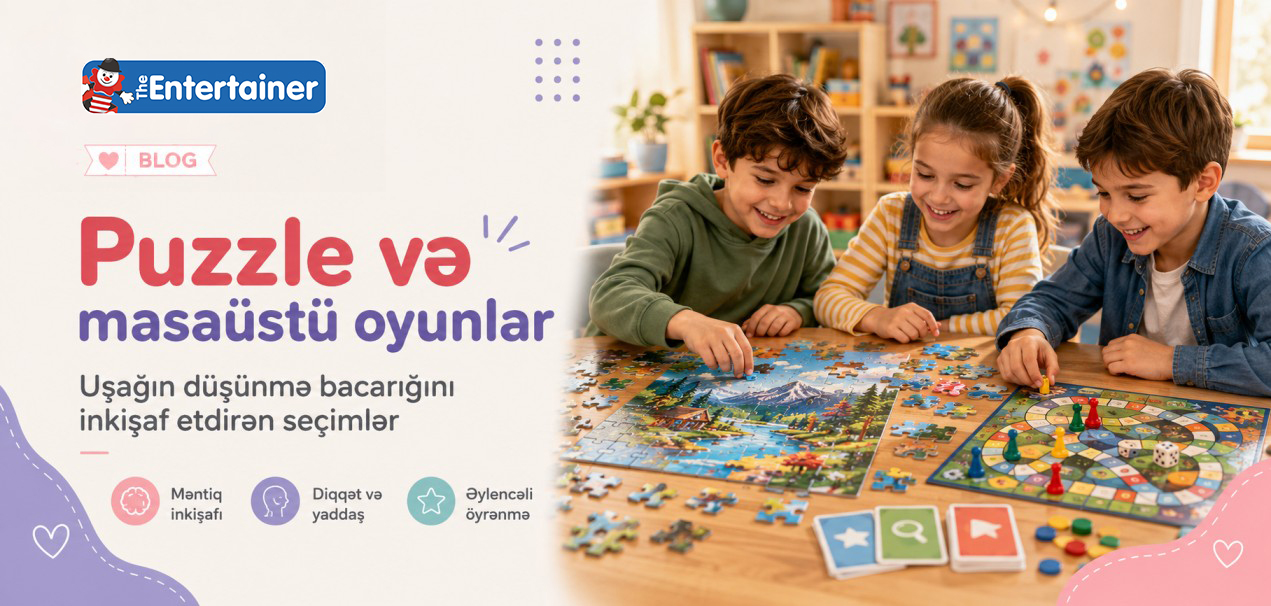
Puzzle və masaüstü oyunlar: uşağın düşünmə bacarığını inkişaf etdirən seçimlər
Uşaqlar ən yaxşı şəkildə oynayaraq öyrənirlər. Düzgün seçilmiş uşaq oyunları onların məntiqi düşünməsini, diqqətini, yaradıcılığını və problem həll etmə bacarıqlarını inkişaf etdirən ən təsirli vasitələrdən biridir.
Xüsusilə puzzle və masaüstü oyunlar həm əyləncəli vaxt keçirməyə, həm də zehni inkişafı dəstəkləməyə kömək edir. Bu yazıda uşaqlar üçün puzzle və masaüstü oyun seçərkən nələrə diqqət etməli olduğunuzu izah edirik.
Puzzle: məntiq və diqqətin inkişafı
Puzzle uşaqlar üçün sadəcə əyləncə deyil, həm də beyin üçün faydalı məşqdir. Hissələri uyğun şəkildə birləşdirmək prosesi uşağın analitik düşünmə qabiliyyətini gücləndirir və diqqətini bir məqsədə yönəltməyə kömək edir.
Puzzle oynamağın əsas üstünlükləri:
- məkan-vizual qavrayışı inkişaf etdirir;
- problem həll etmə bacarığını artırır;
- diqqət və səbir formalaşdırır;
- əl-göz koordinasiyasını gücləndirir;
- incə motor bacarıqlarının inkişafına kömək edir.
Yaşa uyğun puzzle seçmək vacibdir. Kiçik yaşlı uşaqlar üçün az hissəli və iri parçalı modellər, məktəb yaşlı uşaqlar üçün isə daha mürəkkəb və çox hissəli puzzle-lar daha uyğun seçimdir.
Masaüstü oyunlar niyə vacibdir?
Masaüstü oyunlar uşaqların təkcə məntiqini deyil, həm də sosial bacarıqlarını inkişaf etdirir. Bu oyunlar vasitəsilə uşaqlar qaydalara əməl etməyi, növbə gözləməyi, qərar verməyi və komanda şəklində oynamağı öyrənirlər.
Masaüstü oyunların uşaqlara qazandırdığı bacarıqlar:
- strateji düşünmə;
- qərarvermə bacarığı;
- səbir və diqqət;
- ünsiyyət və əməkdaşlıq;
- uduzmağı və qalib gəlməyi düzgün qəbul etmə;
- qaydalara uyğun davranma vərdişi.
Ailə ilə birlikdə oynanılan masaüstü oyunlar həm də valideyn-övlad münasibətlərini gücləndirən gözəl fəaliyyətlərdən biridir. Bu oyunlar uşaqlara həm öyrənmək, həm də ailə ilə keyfiyyətli vaxt keçirmək imkanı yaradır.
Uşaq oyunları seçərkən nələrə diqqət etməli?
Doğru oyun seçimi uşağın inkişafına birbaşa təsir göstərə bilər. Buna görə puzzle və masaüstü oyun alarkən yalnız dizayna deyil, oyunun yaş uyğunluğuna, qaydalarına və uşağın maraqlarına da diqqət etmək lazımdır.
- oyunun yaş göstəricisinə uyğun olmasına diqqət edin;
- uşağın maraq dairəsinə uyğun mövzu seçin;
- kiçik yaşlı uşaqlar üçün sadə qaydalı oyunlara üstünlük verin;
- daha böyük uşaqlar üçün strategiya və düşünmə tələb edən oyunları seçin;
- yeni oyunun qaydalarını ilk dəfə birlikdə öyrənin və birlikdə oynayın;
- ailə ilə oynanılan oyunları gündəlik rutinə çevirməyə çalışın.
Yaşa görə puzzle və masaüstü oyun seçimi
Hər yaş dövründə uşağın diqqət müddəti, düşünmə bacarığı və oyun tərzi fərqli olur. Ona görə oyun seçərkən yaş mərhələsini nəzərə almaq vacibdir.
- 3–5 yaş: iri hissəli puzzle-lar, rəng və forma tanıma oyunları, sadə uyğunlaşdırma oyunları;
- 6–8 yaş: orta çətinlikli puzzle-lar, yaddaş oyunları, sadə qaydalı masaüstü oyunlar;
- 8 yaş və yuxarı: çox hissəli puzzle-lar, strategiya oyunları, komanda və rəqabət əsaslı masaüstü oyunlar.
Yaşa uyğun seçim uşağın oyundan yorulmadan zövq almasına və mərhələli şəkildə daha çətin oyunlara keçməsinə kömək edir.
Puzzle və masaüstü oyunlar uşağın inkişafına necə kömək edir?
Puzzle və masaüstü oyunlar uşaqların düşünmə bacarığını fərqli istiqamətlərdə inkişaf etdirir. Puzzle daha çox diqqət, məkan qavrayışı və məntiq üzərində işləyir, masaüstü oyunlar isə qayda, strategiya və sosial ünsiyyət bacarıqlarını gücləndirir.
Bu oyunlar uşaqlara aşağıdakı sahələrdə dəstək olur:
- məntiqi düşünmə;
- analitik yanaşma;
- problem həll etmə;
- diqqəti toplama;
- sosial ünsiyyət;
- yaradıcılıq və təxəyyül.
Nəticə
Doğru seçilmiş puzzle və masaüstü oyunlar uşaqların həm əylənməsinə, həm də analitik düşünmə, məntiq, diqqət və sosial bacarıqlarının inkişafına töhfə verir.
Əgər övladınız üçün həm maraqlı, həm də faydalı uşaq oyunları axtarırsınızsa, yaşına və maraqlarına uyğun puzzle və masaüstü oyunları seçərək onun inkişafını oyun vasitəsilə dəstəkləyə bilərsiniz. The Entertainer Azerbaijan-da fərqli yaş qrupları üçün puzzle və masaüstü oyun seçimlərini kəşf edə bilərsiniz.